Introduction
Gaming is rapidly evolving beyond flat-screen monitors. With the rise of immersive technologies, two acronyms often come up: VR (Virtual Reality) and XR (Extended Reality). While they may sound similar, they represent very different experiences — and their relevance in gaming in 2025 has major implications for developers, hardware makers, and players alike. In this article, we’ll clarify what VR and XR mean in the context of gaming, explore how they differ, and assess which has the stronger future.
What is VR in Gaming?
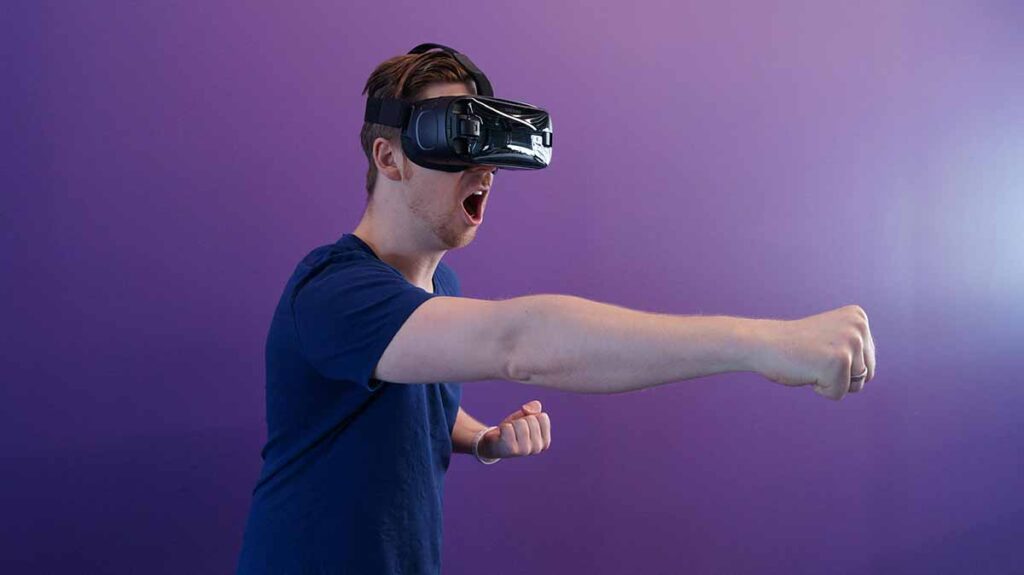
Virtual Reality (VR) places the player in a fully-immersive digital environment. The real world is completely blocked out, replaced by a virtual world created by the headset and software. The goal is immersion — you feel like you’re inside the game world. The Interaction Design Foundation+2Euphoria XR+2
Typical attributes of VR gaming include:
- Head-mounted displays (HMDs) which cover the eyes and sometimes ears
- Three-dimensional virtual environments you can interact with
- Game libraries optimized for immersive interactions, movement, and spatial input
In gaming, VR has been used heavily for simulations, social VR platforms, rhythm games, and narrative experiences. The recent upgrades in resolution, tracking, and hardware make VR gaming more accessible and higher quality than ever. Euphoria XR
What is XR in Gaming?
Extended Reality (XR) is an umbrella term that covers all “realities” that alter or extend our perception — including VR, AR (Augmented Reality), and MR (Mixed Reality). XR is the broader category. Arm Newsroom+1
In gaming, XR is used to describe experiences where digital and physical worlds blend. Examples include:
- AR overlays in real-world spaces
- VR modes where virtual objects respond to your actual environment
- Devices that support both immersive VR and interactive AR/MR in one package
Because XR covers a spectrum from fully virtual (VR) to fully real with overlays (AR), it represents a future-facing category of immersive gaming.
Key Differences Between VR and XR for Gaming
Here’s a comparison of how VR and XR differ, especially in gaming contexts:
| Feature | VR | XR |
|---|---|---|
| Immersion level | High — you’re fully inside a digital world, real world blocked | Variable — ranges from fully virtual to augmented real world, blending both |
| Hardware environment | Typically head-mounted display designed for immersion | Can include AR glasses, MR headsets, or devices supporting both VR/AR modes |
| Use cases in gaming | Story-driven, simulation, escape, full immersion gameplay | Hybrid modes: real-world interactions, overlay gaming, spatial gaming environments |
| Library/compatibility | Mature VR game ecosystem (PC VR, console VR) | Emerging game modes, spatial gaming, mixed reality gameplay across devices |
| Future openness | Strong for immersion but limited by hardware form-factor | Very broad — covers entire spectrum, more flexible, adapts to new hardware forms |
These distinctions matter because when gamers ask “VR vs XR”, they’re really asking: “Do I want full immersion or flexibility across realities?” In 2025, both have roles — but they serve different needs.
Why XR is Being Positioned as the Future of Gaming
- Flexibility across realities — XR lets games shift between AR, MR and VR modes. That means a game could begin in AR (overlaid on your real room) then switch to full VR for deeper immersion, all on the same hardware ecosystem.
- Broader device compatibility — With XR, you’re not limited to full-blown VR head-sets. Smart AR glasses, mixed reality wearables, and even mobile devices contribute to the spectrum. That opens gaming to new form-factors and contexts.
- Integration with real-world environments — Modern XR games can use your physical space as part of the gameplay, offering richer interaction and social immersion. For example, digital objects interacting with your room or real physical props blending with virtual elements. ScreenApp+1
- Emerging hardware and ecosystems — Companies are building hardware that bridges VR and AR. The advent of XR-first platforms (such as those mentioned by Google’s Android XR) underline this shift. Tom’s Guide+1
- Future-proofing gaming experiences — Investing in XR means hardware that adapts. A headset capable of VR today may support AR/MR tomorrow, making it a longer-term bet for gamers and developers.
Why VR Still Holds a Strong Place in Gaming
VR isn’t obsolete — far from it. Here are reasons VR remains essential in gaming:
- Immersion is unmatched — For narrative games, simulation, horror titles, or social VR, the full immersion of VR remains the gold standard.
- Strong ecosystem — VR gaming ecosystems on PC (SteamVR, Oculus PC), and standalone VR devices are mature and well supported.
- Performance and design maturity — High-end VR headsets now deliver superb resolution, tracking, and comfort, making serious gaming possible.
- Clear design focus — VR games know what they are: immersive worlds, spatial gameplay. XR games often need to cater to both AR and VR modes, meaning more complexity in design.
Gaming Implications & What to Watch in 2025-26
- Hardware convergence: Expect headsets that support both VR and AR modes (true XR devices) to become more common, reducing fragmentation.
- Game design shifts: Developers will design for XR as a spectrum — so games may support “sit-down VR” mode and “room AR” mode with same code-base.
- New business models: Subscription and streaming may merge VR/XR experiences, allowing players to transition between device types seamlessly.
- Accessibility & portability: XR hardware form-factors (lighter, glasses-like) may open gaming to broader audiences and new environments (travel, mobile).
- Social & mixed reality experiences: Expect more shared-space XR experiences where virtual and physical participants interact; this blends gaming and real life.
Which Should You Choose: VR or XR?
For gamers deciding now:
- Choose VR if you want deep immersion, large virtual worlds, and you’re gaming primarily at home with space for a headset and controllers.
- Choose XR if you value flexibility (play at home, wander around, mix real & virtual worlds), want future-proof hardware, or anticipate AR/VR blended games.
- If budget allows, pick hardware that supports VR now but is “XR-ready” (or upgradeable) so you’re prepared for the next wave of immersive gaming.
Conclusion
In 2025, both VR and XR are poised to reshape gaming—but they sit at different points on the spectrum of immersion and flexibility. VR continues to deliver high-fidelity experiences in fully virtual worlds. XR, meanwhile, offers a broader vision: one where the line between the physical and digital blurs, and gaming becomes more adaptable, portable and integrated into real life.
While VR remains crucial for the deepest immersion, XR is the category that many are calling “the future of immersive gaming”, thanks to its flexibility and potential across device types and contexts. For gamers, developers and hardware makers alike, understanding these technologies—and their differences—is key to staying ahead in an era of immersive experiences.